


From HR Data to Better Decisions: How People Analytics Is Changing HR
-A Conversation with Paola Cristina Mottola-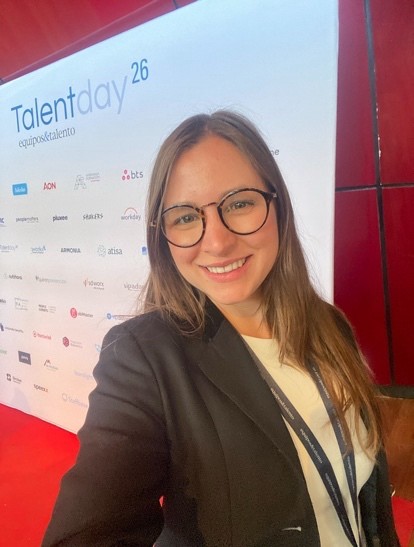
HR has more data than ever. But the real challenge is knowing how to turn it into better decisions without losing sight of the people behind the numbers.
Paola Cristina Mottola is an HR professional at BYPILLOW with experience in recruitment and a background in Data Analytics. In this edition of Talent-R Tech Talks, she shares how People Analytics is transforming HR, from anticipating employee needs to making more informed and responsible decisions.
From Data to Decisions
Hello Paola, thank you for joining us in this new edition of Talent-R Tech Talks. You started your career in HR and later specialised in Data Analytics. 1. What made you realise that data could change the way HR professionals make decisions?
“I started to see how data could complement that experience and help us understand what is really happening behind the scenes.
For example, instead of simply knowing that employee turnover is increasing, we can start asking why it’s happening, whether there are specific patterns, and what we can do about it.
That’s what I find so interesting about People Analytics: it’s not about replacing human judgement with data. It’s about making better-informed decisions by combining data, business understanding, and the human perspective.”
Turning Data into Action
HR teams have access to countless metrics. How do you identify which data is actually useful, and how can it help companies anticipate problems before they happen?
“The starting point is always the question we want to answer. I don’t think we should start by looking at all the data we have available. We should start by understanding the problem or the decision we need to make.
Ultimately, I think the goal is not to collect more data or create more dashboards. It’s to identify the right information that helps us ask better questions and make better decisions.”
Employee turnover is one example of how this approach can work:
“The objective is to identify signals, ask better questions, and take preventive action where appropriate.”

Keeping People at the Centre
When HR decisions become increasingly data-driven, how do you balance what the numbers tell you with the human context behind them?
“A number can show us a pattern, but it doesn’t necessarily explain the full story behind it.
That’s why I believe data should be the starting point for a conversation, not the final answer.
Ultimately, the numbers help us understand where to look, but we still need people to understand what those numbers really mean.”
People Analytics often involves sensitive employee information. How can companies use it responsibly while maintaining trust?
“Responsible People Analytics starts with being clear about why we’re collecting data, what we’re going to use it for, and who has access to it.
Ultimately, responsible People Analytics is about finding the balance between generating value for the organisation and respecting the privacy, dignity, and trust of its people.”
The Future of Data-Driven HR
As AI transforms HR, which skills will become more important for professionals working with data?
“The real opportunity is using that technology to free up time, improve processes, and focus more on the things where human judgement and interaction make a difference.
I also think ethical judgement will become increasingly important as AI is used in decisions that affect employees.
For me, the HR professionals who will make the biggest difference are not necessarily those who know the most about technology, but those who can connect technology, data, business needs, and the human side of HR.”
People Analytics is changing HR from a function that reacts to problems into one that can anticipate them, make smarter decisions, and create better workplaces. But as AI takes on more of the analytical work, one question remains: how can HR use technology to understand people better, rather than simply measure them?
As AI continues to reshape HR, we’ll explore more perspectives on the people, ideas, and skills shaping the future of work in our upcoming Talent-R Tech Talks.
